Teacher Quality
Q1: For beginners with zero foundation in Japanese, should I choose a Hong Kong teacher or a Japanese teacher?
A1: If you have never studied Japanese before, it is recommended to learn from a Japanese teacher, because you can acquire the most accurate and natural pronunciation, building a solid foundation.
Learning Format
Q2: Is it better to learn Japanese through face-to-face or online courses?
A2: Face-to-face courses are definitely better! You can hear more clearly, directly interact with teachers and classmates, and enjoy the atmosphere and interaction in class, making learning more enjoyable.
Japanese Proficiency
Q3: How long does it take to learn Japanese before being able to converse?
A3: With around 120 hours of study, you can manage basic conversations such as self-introductions, greetings, shopping, and asking for directions.
Q4: What JLPT level is generally required when applying for jobs at Japanese companies?
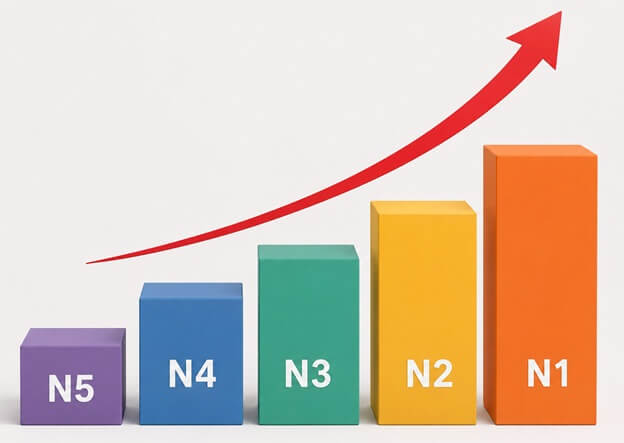
A4: Most Japanese companies require at least JLPT N2 for employment.
Q5: Which JLPT level is equivalent to DSE?
A5: DSE is approximately equivalent to JLPT N3.
Q6: If starting from zero, how long does it take to reach JLPT N3 or JLPT N2?
A6: Under normal circumstances, if you attend classes for 2.5 hours per week, it takes about 3 years (360 hours) to reach JLPT N3 and about 4 years (480 hours) to reach JLPT N2.
If you want to progress faster, with 12 hours of classes per week, it takes about 9 months to reach JLPT N3 and about 12 months to reach JLPT N2.
Free Trial Lessons
Q7: Before enrolling, which schools offer free trial lessons?
A7: Pasona Education often provides a one-hour free Japanese trial lesson. Please check their official website, Facebook, or Instagram for announcements.